
 Crop: Durian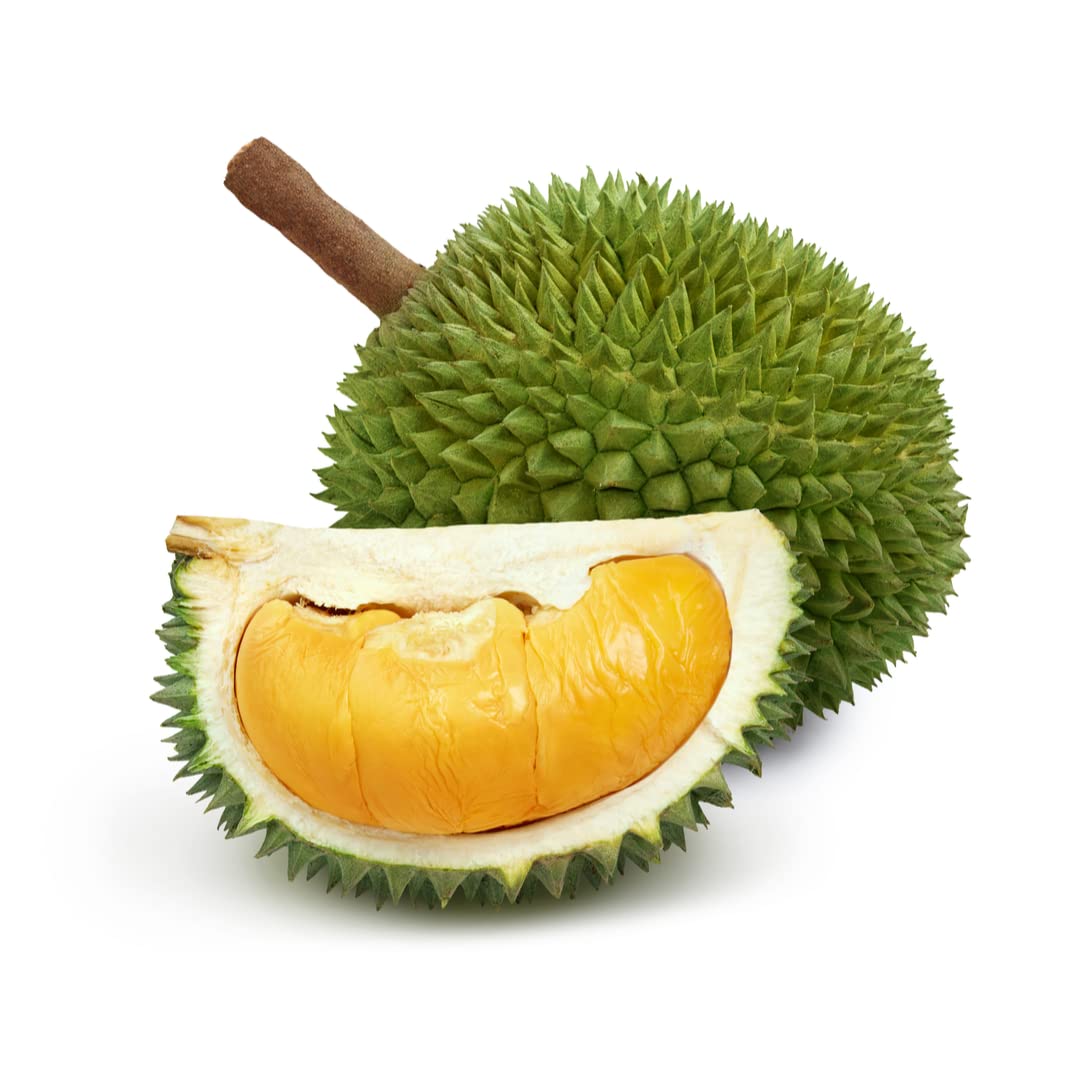
The problem
Growers often find high-value durians (such as Musang King or Black Thorn) splitting at the base or along the carpel sutures several weeks before maturity, or cracking immediately after heavy tropical downpours.
Cracked durians lose commercial value instantly. Opportunistic fungi and insects enter through the fissures, causing aril souring, rot, and complete rejection by export packhouses.[2]
While small mechanical defects can occur, widespread orchard fruit splitting points to an underlying physiological disruption between tree water uptake and fruit cell wall structural integrity.[3]
Common causes
- Sudden moisture swings after dry weather. When heavy monsoon rain follows a dry spell, tree roots absorb water rapidly. The inner pulp cells expand exponentially under high turgor pressure. If the outer husk cuticle has already hardened and lost elasticity, the rind splits open along natural suture lines.[1, 4]
- Potassium-Calcium nutrient antagonism. High chemical potassium is commonly applied during fruit bulking to increase sweetness and fruit size. However, excessive potassium cations in the soil solution compete directly with and suppress root absorption of calcium.[3]
- Calcium and Boron deficiency. Calcium forms calcium pectate, the essential cement of plant cell walls. Boron acts as the critical cross-linking agent that binds pectin strands together. Calcium is phloem-immobile; once cell division stops, calcium cannot be redistributed from older leaves into expanding fruits.[3]
- Excess synthetic Nitrogen flush. Overdosing high-nitrogen chemical fertiliser during fruit filling triggers rapid, watery cell elongation and thins the protective outer pericarp, making the fruit rind brittle.[2]
What to do
Managing durian fruit cracking requires stabilising root moisture and ensuring continuous calcium availability:
- Buffer soil moisture with organic mulch. Maintain a thick layer of organic mulch around the tree drip line (keeping the trunk clear) to prevent the topsoil from drying out completely between irrigation cycles.[1, 4]
- Avoid abrupt irrigation changes. Irrigate regularly in moderate amounts during fruit sizing rather than allowing the soil to dry out followed by heavy flooding.[4]
- Balance potassium with bio-available calcium. Do not overload chemical potassium alone during fruit filling. Ensure calcium and trace boron are continuously available from early fruit set onwards.[3]
- Control nitrogen during ripening. Avoid high-nitrogen mineral topdressing in the final 4 to 6 weeks before harvest to prevent sudden vegetative flushes that starve fruit of calcium.[2]
- Maintain good canopy airflow and sunlight. Proper canopy pruning allows sunlight to reach fruit clusters evenly, ensuring uniform rind cuticle thickness and reducing fungal infection.[1]
If a chemical pesticide or fungicide is needed, consult the Department of Agriculture (DOA) or an agronomist for products registered for your crop, and follow the label.
Where NEXGROW fits
NEXGROW bio-organic fertiliser provides over 50% organic matter that functions as an elastic moisture sponge in the root zone, moderating water uptake swings during sudden rain.
Its natural humic and fulvic acids (>20%) chelate soil calcium and micronutrients, facilitating steady, uninterrupted root uptake without the salinity spikes or potassium-calcium antagonism caused by excessive chemical salts.
For application timing and rates, see the durian program in the NEXGROW booklet.
NEXGROW rates from the official product booklet: Durian
| Crop age | NEXGROW dose |
|---|---|
| Planting hole | 250 g / planting hole |
| 1 year | 500 g / tree |
| 2 years | 750 g / tree |
| 3 years | 1 kg / tree |
| 4 years | 2 kg / tree |
| 5 years and aboveApply after harvest | 3 kg / tree |
When to get a soil test
Take a soil test before flowering to check exchangeable calcium, magnesium and potassium levels. An imbalanced K:Ca ratio in the soil is the single most reliable predictor of fruit splitting during the monsoon.[3]
Not sure what is wrong with your crop?
Send photos of the leaves, fruit and roots, with the crop age and what you have applied, and an agronomist will reply on WhatsApp. For fertiliser decisions, start with a soil test.
Frequently asked questions
Why do durians crack right after heavy rain?
The pulp cells absorb water quickly and expand faster than the hardened outer husk can stretch. Maintaining organic soil cover and steady moisture reduces this osmotic shock.
Can foliar calcium spray completely stop fruit cracking?
Foliar sprays can help during early fruitlet development, but fruit cracking is primarily driven by root-level water regulation and soil calcium balance.
Does excessive potassium cause durian splitting?
Yes. High chemical potassium competes with calcium absorption in root zones. Without sufficient calcium and boron, cell walls remain weak and tear easily under internal pressure.
How does organic fertiliser help prevent fruit cracking?
High organic matter (>50%) increases soil water-holding capacity, preventing extreme wet-to-dry transitions, while humic acids facilitate continuous calcium uptake.
Sources
Agronomic statements in this tip are based on the sources below. Numbers in brackets in the text refer to this list.
- [1]Durian for Hawai'i (F_N-53) — University of Hawai'i at Mānoa, College of Tropical Agriculture and Human Resources
- [2]Panduan Penanaman Durian (Edisi Ketiga) — Jabatan Pertanian Semenanjung Malaysia (DOA)
- [3]Calcium and boron nutrition in relation to physiological disorders and fruit cracking in tropical fruit trees — Malaysian Agricultural Research and Development Institute (MARDI)
- [4]Soil moisture fluctuations and physiological fruit splitting in Durio zibethinus — Malaysian Society of Soil Science (MSSS)