
 Crop: Durian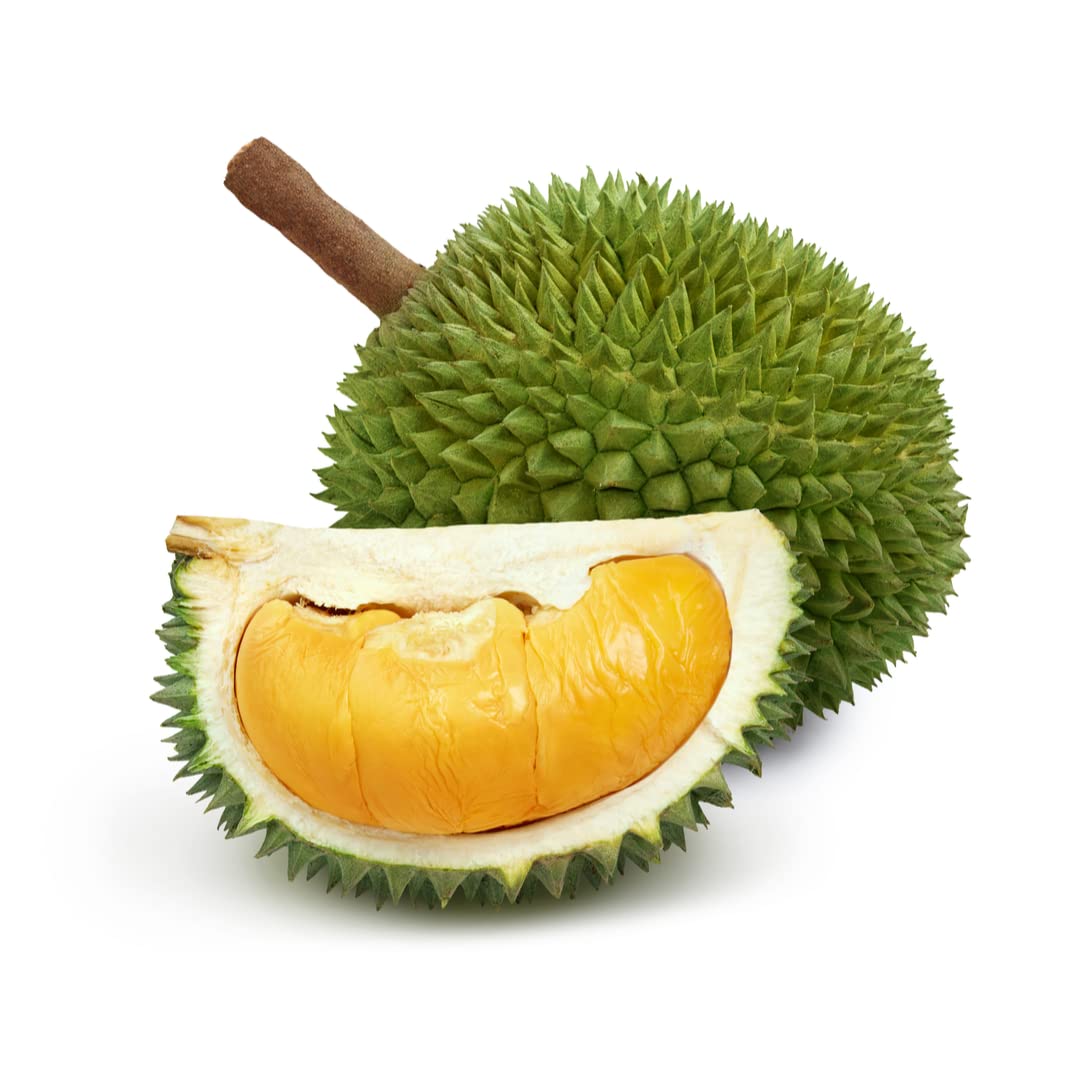
The problem
A durian tree with unhealthy roots shows it slowly: thinning canopy, yellowing or wilting leaves, dieback of branches, poor flowering and, in bad cases, cankers on the trunk and tree death. Very often the trouble starts in the soil — in low spots where water sits after rain.
Durian grows in a range of well-drained soils with a pH between about 5 and 7.5, and does best with good drainage and a thick layer of organic matter on the soil surface under the canopy.[4]
The greatest disease threat to durian worldwide is Phytophthora palmivora, which can attack every stage of the crop — seedlings, leaves, the trunk and branches (patch canker) and fruit. It spreads with water, which is why drainage matters so much.[1]
Common causes
- Standing water after heavy rain. A study of durian orchards in Peninsular Malaysia reported that sites with waterlogging are at risk after heavy rain, because Phytophthora spores are easily carried through the orchard in water. Orchards with severe waterlogging were more prone to poor growth and infection.[2]
- Low-lying parts of sloping land. The same study found severe waterlogging on sloping orchards where water pools in the low spots.[2]
- Humid, crowded orchards. Close planting with intertwining canopies, poor drainage and poor hygiene raise humidity and make disease worse.[1]
- Swings between drought and wet. Drought lowers tree vigour and can predispose trees to disease; researchers in Queensland see irrigation that avoids big swings in soil moisture as part of managing durian decline. A second root pathogen, Pythium vexans, becomes more severe under excessive moisture.[3]
- Root damage. Root pruning is not widely used in durian because of the risk of Phytophthora infection through the wounds.[4]
- Acidic soil. In the Malaysian survey, stem canker was slightly more common on acidic soils (below pH 5.0). The link was weak, so treat low pH as one factor among several, not the cause.[2]
What to do
- Fix drainage first. Walk the orchard after heavy rain and mark where water stands. Open or deepen drains so water leaves the root zone quickly. Saturated soil favours the spread of Phytophthora, and root rot can develop after only hours of saturation in susceptible plants.[2, 5]
- Plant on mounds where drainage is poor. In poorly drained soil, or where Phytophthora is known to be present, planting on raised mounds keeps the root collar out of standing water.[5]
- Let air through the canopy. Cultural control recommended for decades includes good drainage, wider tree spacing, pruning low branches and removing weeds under the canopy to reduce humidity.[1]
- Mulch — but keep it off the trunk. A layer of organic mulch under the canopy suits durian roots. Mulch should not touch the trunk.[4]
- Keep soil moisture steady. Irrigate in long dry spells so trees are not weakened by drought, and avoid overwatering.[3]
- Avoid wounding roots and the trunk base. Be careful with machinery, weeding tools and digging close to the tree.[4]
- Choose planting material with care. Durian clones differ in how susceptible they are to disease, so ask your nursery about the clone's track record in wet sites.[4]
If you already see trunk cankers, oozing or sudden decline, get the tree diagnosed. Treatment of Phytophthora needs registered products and a proper programme — this is not something a fertiliser fixes.
If a chemical pesticide or fungicide is needed, consult the Department of Agriculture (DOA) or an agronomist for products registered for your crop, and follow the label.
Where NEXGROW fits
NEXGROW is not a treatment for Phytophthora or any other disease, and it cannot make up for poor drainage. Where it fits is the soil around healthy, well-drained trees: the booklet describes it as helping durian form a strong root system that absorbs water and nutrients well, and notes that durian roots are sensitive to soil compaction.
The rates below are taken directly from the booklet.
NEXGROW rates from the official product booklet: Durian
| Crop age | NEXGROW dose |
|---|---|
| Planting hole | 250 g / planting hole |
| 1 year | 500 g / tree |
| 2 years | 750 g / tree |
| 3 years | 1 kg / tree |
| 4 years | 2 kg / tree |
| 5 years and aboveApply after harvest | 3 kg / tree |
When to get a soil test
Get a soil test when you are planting a new block, when trees in one part of the orchard decline while others thrive, or before liming. A test shows whether the soil is strongly acidic, which the Malaysian survey associated with more stem canker, and lets you correct it with the right amount of lime rather than a guess.[2]
Sample healthy and declining areas separately so you can compare them.
Not sure what is wrong with your crop?
Send photos of the leaves, fruit and roots, with the crop age and what you have applied, and an agronomist will reply on WhatsApp. For fertiliser decisions, start with a soil test.
Frequently asked questions
Can durian survive waterlogging?
Durian needs well-drained soil. Waterlogged sites constrain growth and are more prone to Phytophthora, which spreads in water after heavy rain. Fix drainage before replanting a wet spot.
What causes patch canker on durian trunks?
Patch canker is one of the diseases caused by Phytophthora palmivora, the most serious disease of durian. Humid, crowded, poorly drained orchards make it worse. Have it diagnosed and consult DOA or an agronomist for registered treatments.
Should I plant durian on mounds?
On poorly drained soil, or where Phytophthora has been a problem, planting on raised mounds helps keep the root collar out of standing water.
Will fertiliser fix root rot?
No. Fertiliser does not treat root disease. Drainage, airflow, hygiene and, where needed, registered products are the tools. Fertilising supports trees that are already growing in well-drained soil.
Sources
Agronomic statements in this tip are based on the sources below. Numbers in brackets in the text refer to this list.
- [1]Phytophthora Diseases of Durian, and Durian-Decline Syndrome in Northern Queensland (O'Gara et al.), ACIAR Monograph 114 — Australian Centre for International Agricultural Research (ACIAR)
- [2]Durian Stem Canker Status and Relative Soil Properties in Peninsular Malaysia (Chong et al., 2024) — Journal of Sustainability Science and Management, Universiti Malaysia Terengganu
- [3]Incidence and pathogenicity of Phytophthora palmivora and Pythium vexans associated with durian decline in far northern Queensland (Vawdrey et al., 2005) — Australasian Plant Pathology
- [4]Durian for Hawai'i (F_N-53) — University of Hawai'i at Mānoa, College of Tropical Agriculture and Human Resources
- [5]Phytophthora Root and Crown Rot — University of California Statewide IPM Program (UC ANR)