
 Crop: Durian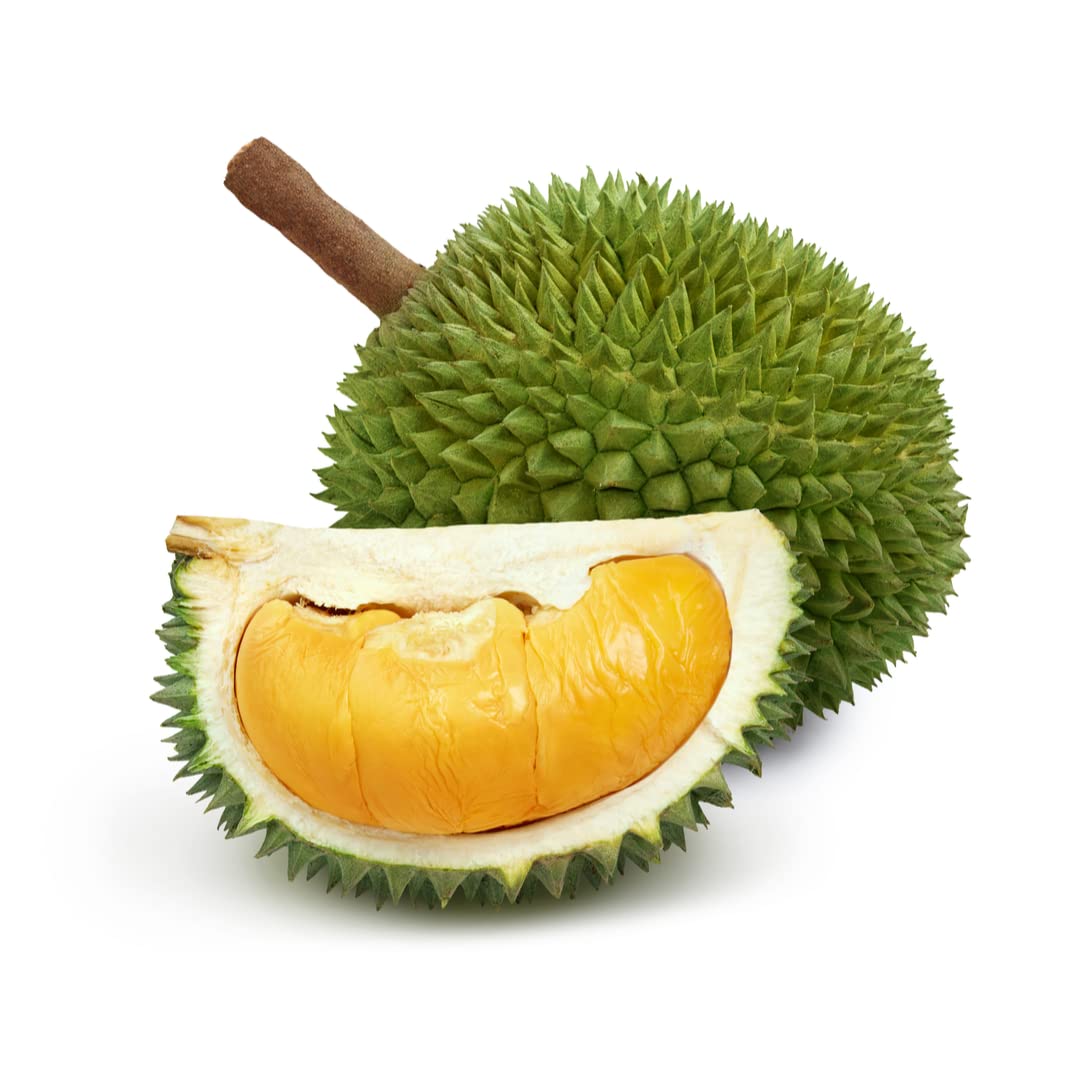
The problem
Durian trees often flower heavily and then shed most of what they set. Growers find flowers and small fruitlets covering the ground within days of flowering and worry that the tree is sick.
Some of this is normal. A study of durian reproduction in Malaysia noted that fruit set is usually very low, because many ovaries drop after the flowers open — either they were not fertilised, or they were damaged by animals visiting the flowers. Within a few days of pollination most young ovaries fall, leaving only one or two on each flower cluster.[1]
So the real question is not whether flowers drop, but whether enough fruit holds to give you a crop. If almost nothing holds, season after season, something is limiting fruit set.
In Peninsular Malaysia durian usually has two main flowering seasons, around March–April and September–October, with smaller flowerings in between. The flowers open in the late afternoon and the stigma becomes receptive in the evening, so pollination happens at night.[1]
Common causes
- Poor pollination. Fruit bats, especially the cave nectar bat (Eonycteris spelaea), are the main pollinators of durian. Giant honey bees visit the flowers most often, but bats do most of the effective pollination. Flowers that are not pollinated drop within days.[1, 2]
- Trees that cannot pollinate themselves. Research in southern Thailand found that most durian trees set very little fruit with their own pollen, although some clones are self-compatible. A block planted with a single clone can therefore flower well and still set poorly.[2]
- Few bats nearby. Where bats are netted or their colonies destroyed, researchers have suggested that low natural fruit set may follow.[2]
- Rain at flowering. Areas with more rain during flowering struggle with fungal and bacterial infections and with flowers dropping without setting fruit.[3]
- Drought after flowering. Durian needs a short dry spell to trigger flowering. A study in Johor found flowering followed a spell of very little rain. But if the dry period drags on, trees drop developing fruit and can be damaged.[3, 4]
- More fruit than the tree can carry. A stressed tree naturally aborts fruit, and very heavy fruit set can itself call for thinning.[3]
What to do
Work through the causes above in order. Most of the fixes are orchard practice, not inputs.
- Water through fruit set. Once flowering has been triggered, irrigate if dry weather continues, so trees are not forced to shed developing fruit.[3]
- Plant more than one clone. When planting or replanting, interplant clones so that trees can cross-pollinate. Ask your nursery or local agriculture office which clones flower at the same time in your area.[2]
- Protect the pollinators. Do not kill or disturb fruit bats near the orchard; they are the durian's main pollinator.[2]
- Consider hand pollination on high-value trees. Hand pollination with pollen from another tree is used to increase fruit set, and gives more even fruit with fewer empty segments. Durian pollen stays viable for about a day and can be collected and kept refrigerated.[3]
- Thin very heavy clusters. Where set is very heavy, thin young fruit to one or two per cluster on each branch.[3]
- Keep roots healthy. Good drainage, a layer of mulch under the canopy (kept away from the trunk) and weed control keep trees strong going into flowering. See our tip on durian roots and waterlogging.[3]
If fallen flowers or fruit show rot, spots or insect damage, get them identified before you spray anything.
If a chemical pesticide or fungicide is needed, consult the Department of Agriculture (DOA) or an agronomist for products registered for your crop, and follow the label.
Where NEXGROW fits
NEXGROW is a bio-organic, phosphate-solubilising fertiliser. For durian, the product booklet describes it as helping the tree form a strong root system, supporting the initiation and development of flowers, and possibly reducing the need for synthetic phosphorus fertiliser.
It is a soil and root input applied by tree age — after harvest for mature trees. It does not replace pollination or water management, which are the main levers for fruit set. The rates below are taken directly from the booklet.
NEXGROW rates from the official product booklet: Durian
| Crop age | NEXGROW dose |
|---|---|
| Planting hole | 250 g / planting hole |
| 1 year | 500 g / tree |
| 2 years | 750 g / tree |
| 3 years | 1 kg / tree |
| 4 years | 2 kg / tree |
| 5 years and aboveApply after harvest | 3 kg / tree |
When to get a soil test
Test the soil before changing your fertiliser programme, and whenever trees flower well but hold little fruit year after year even with good pollination and watering. The result tells you whether pH or a nutrient is actually short, so you correct that instead of adding more of everything.
Sample the root zone around the edge of the canopy, mixing several cores from across the block. Our team can arrange the test and go through the results with you.
Not sure what is wrong with your crop?
Send photos of the leaves, fruit and roots, with the crop age and what you have applied, and an agronomist will reply on WhatsApp. For fertiliser decisions, start with a soil test.
Frequently asked questions
Is it normal for durian flowers to drop?
Yes. Durian sheds most of its flowers and young ovaries after flowering; typically only one or two fruitlets per flower cluster remain. It becomes a problem when almost no fruit holds.
Who pollinates durian?
Mainly fruit bats, especially the cave nectar bat (Eonycteris spelaea), at night. Giant honey bees visit often, but bats are the main pollinators.
Does hand pollination work?
Extension guides report that hand pollination with pollen from another tree increases fruit set and gives more even fruit. It takes a lot of labour, so it is usually kept for high-value trees.
Can fertiliser stop flower drop?
No fertiliser makes up for missing pollination or a dry spell during fruit set. Fertilising guided by a soil test keeps the tree healthy enough to carry the fruit it does set.
Sources
Agronomic statements in this tip are based on the sources below. Numbers in brackets in the text refer to this list.
- [1]The Reproductive Biology of Durio zibethinus Murr. (Soepadmo & Eow, Gardens' Bulletin Singapore 29, 1977) — University of Malaya authors; Gardens' Bulletin Singapore
- [2]The pollination ecology of durian (Durio zibethinus, Bombacaceae) in southern Thailand (Bumrungsri et al., 2009) — Journal of Tropical Ecology, Cambridge University Press
- [3]Durian for Hawai'i (F_N-53) — University of Hawai'i at Mānoa, College of Tropical Agriculture and Human Resources
- [4]Dry spells trigger durian flowering in aseasonal tropics — International Journal of Biometeorology (Springer), via PubMed Central